

Media Coverage
[Seoul Economic Daily] Kim Hyun-soo, CEO of Pamisell: "The Popularization of Stem Cell Therapies... Will Bring Hope to Patients with Intractable Diseases"
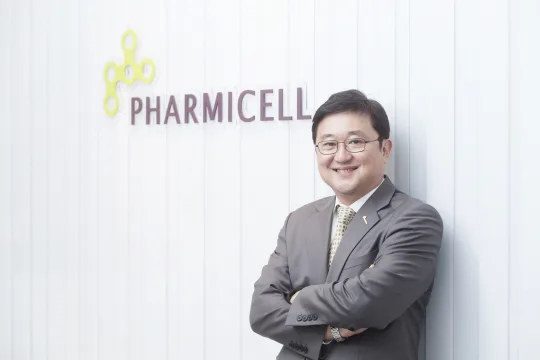
Kim Hyun-soo, CEO of Pamisell: "Making Stem Cell Therapies More Accessible... Will Bring Hope to Patients with Intractable Diseases"
Establishing a Hospital That Prescribes Treatments Directly to Patients
Taking the Lead in Expanding the Scope of Therapeutic Applications
Developing New Drugs in Collaboration with the University of Utah and Others
Aiming
to Enter Commercial Clinical Trials Within Five Years “Through the ‘Kim Hyun-soo Stem Cell Clinic,’ which opened earlier this year, we will strive to make stem cell therapies accessible to the public.”
Kim Hyun-soo (pictured), CEO of Pamisell (005690), met with reporters from the Seoul Economic Daily on the 27th at the “Kim Hyun-soo Stem Cell Clinic” in Sinsa-dong, Gangnam-gu, Seoul, and said “Although stem cell therapies are being developed one after another, there are still not many doctors who have actual experience using them properly,” he said, adding, “We will expand the scope of stem cell therapy applications by directly demonstrating to patients how it is applied.” CEO Kim stated, “We plan to provide stem cell treatment services—which offer hope to patients with intractable diseases—using specialized equipment,” adding, “We will serve as a role model for domestic doctors as a specialized stem cell treatment hospital.”
A former professor of internal medicine at Ajou University, CEO Kim founded Pamicell in 2002 and has since devoted himself to the development of stem cell therapies. As a result, in July 2011, he developed “Cellgram-AMI,” the world’s first stem cell therapy for acute myocardial infarction. In recognition of this achievement, CEO Kim was listed in “Marquis Who’s Who,” one of the world’s three major biographical directories. Not content to stop there, CEO Kim decided to establish a hospital that would directly prescribe stem cell therapies to patients. Although he originally planned to establish it as a for-profit corporation with outside investment, he ultimately founded it as a private hospital because obtaining the necessary legal permits is currently difficult.
CEO Kim emphasized, “I determined that a specialized hospital is necessary to expand the availability of stem cell therapies,” adding, “Going forward, we will secure more medical staff and expand our global network to grow into a 300-bed specialized hospital by 2021.”
Once the hospital becomes fully operational, PamiCell’s performance is expected to improve. CEO Kim explained that since the hospital will source stem cell therapies from PamiCell, the company’s revenue will naturally increase once the hospital is up and running.
Pamisell also plans to continue its research and development of stem cell therapies. The company has completed a Phase 2 clinical trial in Korea for a stem cell therapy targeting cirrhosis—one of the leading causes of death in the country—and plans to conduct a Phase 1 clinical trial in the U.S. within this year, pending approval from the U.S. Food and Drug Administration (FDA). In addition, the company is developing treatments for brain and spinal cord diseases and conducting domestic clinical trials. CEO Kim stated, “If Cellgram-AMI is a first-generation stem cell therapy, the stem cell therapies currently under development can be considered second-generation therapies with dramatically enhanced therapeutic capabilities,” and “We are conducting research in collaboration with institutions such as the University of Utah, and our goal is to enter commercialization-phase clinical trials for these second-generation stem cell therapies within the next five years,” he explained.
To diversify its revenue streams, Pamicell acquired IDB Chem, an active pharmaceutical ingredient (API) manufacturer, in 2012 and has since been producing and selling various APIs. The company develops substances used in gene therapies and diagnostic reagents, as well as raw materials for new hemophilia treatments, and supplies them to multinational pharmaceutical companies. CEO Kim said, “Performance in the API business has been improving since last year, and it will establish itself as PamiCell’s main cash cow going forward,” adding, “We will also grow our stem cell cosmetics business by leveraging the distribution networks we have secured in Korea and China.”


