

Media Coverage
[Digital Times] Kim Hyun-soo, CEO of Pamicell: "We Will Grow Our Stem Cell Specialty Hospital Into a General Hospital"
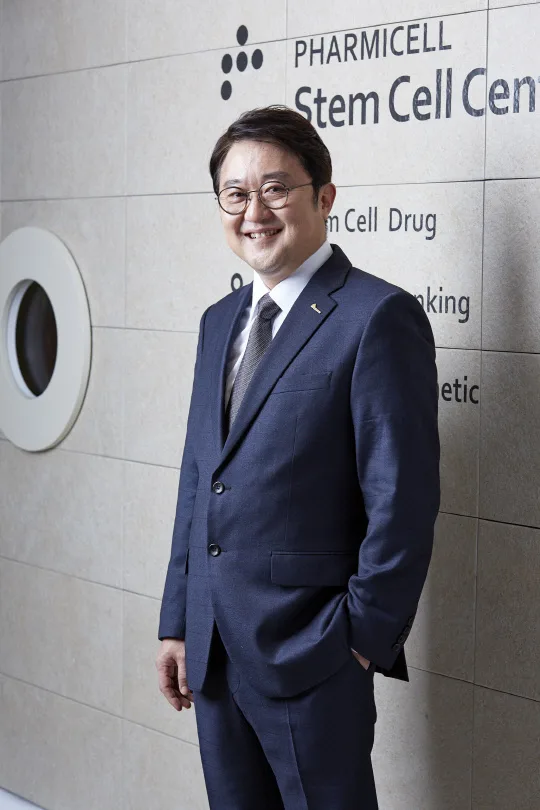
Kim Hyun-soo, CEO of Pamicell: "We Will Grow Our Stem Cell Specialty Hospital into a General Hospital"
"The company will strike a balance between research and development and financial performance, and we will grow the hospital into a general hospital."
Kim Hyun-soo, CEO of Pamisell, expressed his ambition to grow the company in a balanced manner—pursuing research and development (R&D) for the future while also generating immediate revenue—and to rapidly expand the hospital, which was opened to raise awareness of stem cell therapies.
CEO Kim, who was formerly a professor in the Department of Hematology and Oncology at Ajou University Hospital, founded Pamisell in 2002. “While performing bone marrow transplants and researching stem cells at the hospital, the government designated stem cells as pharmaceuticals in 2002, which imposed restrictions on procedures. To continue delving into the stem cell field, I had no choice but to establish a pharmaceutical company,” he said.
Having invested approximately 30 billion won in R&D since the company’s founding, he developed “HatiCellGram AMI,” the world’s first stem cell therapy, in 2011. Last year, the company recorded sales of 9.6 billion won from nucleosides—pharmaceutical intermediates—and 5.4 billion won from eco-friendly flame retardants, bringing annual revenue to 27.8 billion won, a 10 percent increase from the previous year. Profitability improved as operating losses also decreased.
In March of last year, he opened the “Kim Hyun-soo Stem Cell Clinic” in Sinsa-dong, Seoul. This is an effort to treat patients directly with the stem cell therapy he developed and to demonstrate its effectiveness. “There is clear potential in stem cell therapies, and we are realizing this step by step,” he said, adding, “We are using stem cells to treat conditions such as liver cirrhosis, peripheral artery disease, and degenerative brain diseases.” He further explained, “If I had established the hospital through Pamicell, it would have been much larger, but since current laws prohibit the establishment of for-profit hospitals that have received outside investment, I opened it as a private clinic,” and He emphasized, “Although it is currently a small hospital focused primarily on stem cell therapies, we plan to expand our scope and develop it into a general hospital specializing in neurology, oncology, and cardiology.”
Since 2009, the hospital has held an annual Pamcell Academic Symposium to raise awareness of the effectiveness and potential of stem cell therapies among the academic and industrial communities. The symposium, which began on a small scale in conjunction with the hospital, has grown in size over the years; the event held last February was attended by approximately 300 participants from academia, the medical community, and the industry. Expressing his desire to expand the event to an international scale in the future, he stated, “While there may be academic conferences addressing upcoming future issues, since this is an event organized by a company, we are working together to consider and share what developers, researchers, and companies need to know.”Regarding government policies related to the bioindustry, including
stem cells, he said, “Since this industry is still in its early stages, consistent policies must be maintained at a level that ensures safety.” He added, “Given that successive administrations have demonstrated a commitment to fostering the bioindustry as a future industry, we must continue this momentum to yield positive results.”


